Black And White: Actually a Grey Area.

Sometimes I include black and white images in my client galleries, and they are often duplicate edits of shots I’ve shown in color. Since most printing services give an automatic black and white conversion option, it may seem unnecessary for me to include these alternate edits. But this is far from the case, and I want to show you how that’s so.
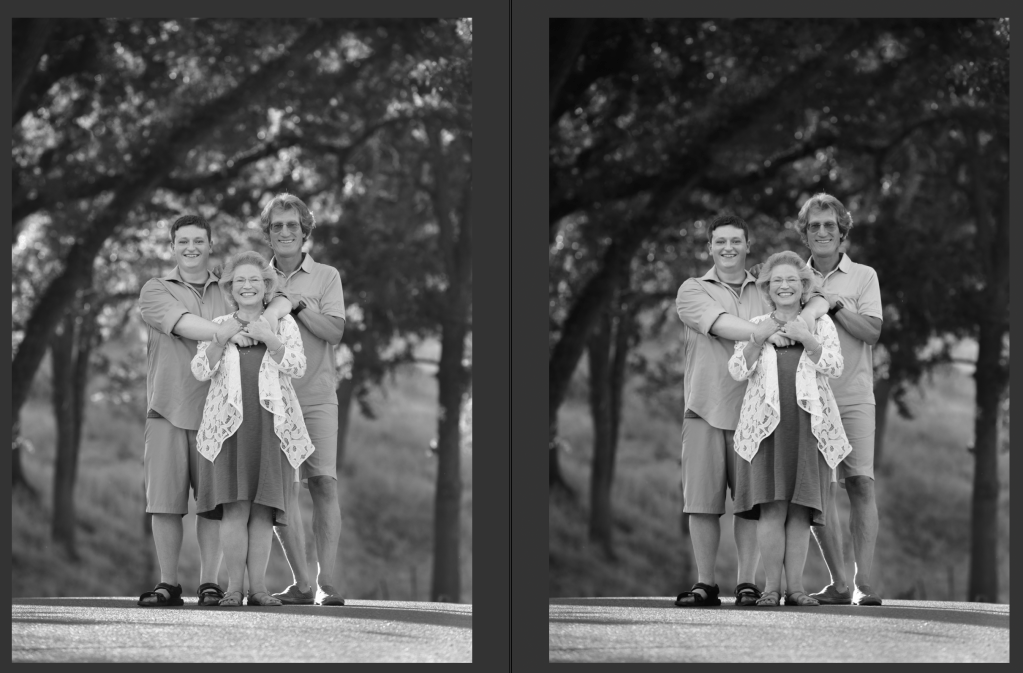
Left: Automatic conversion to black and white from color
Right: hand-process of a black and white conversion
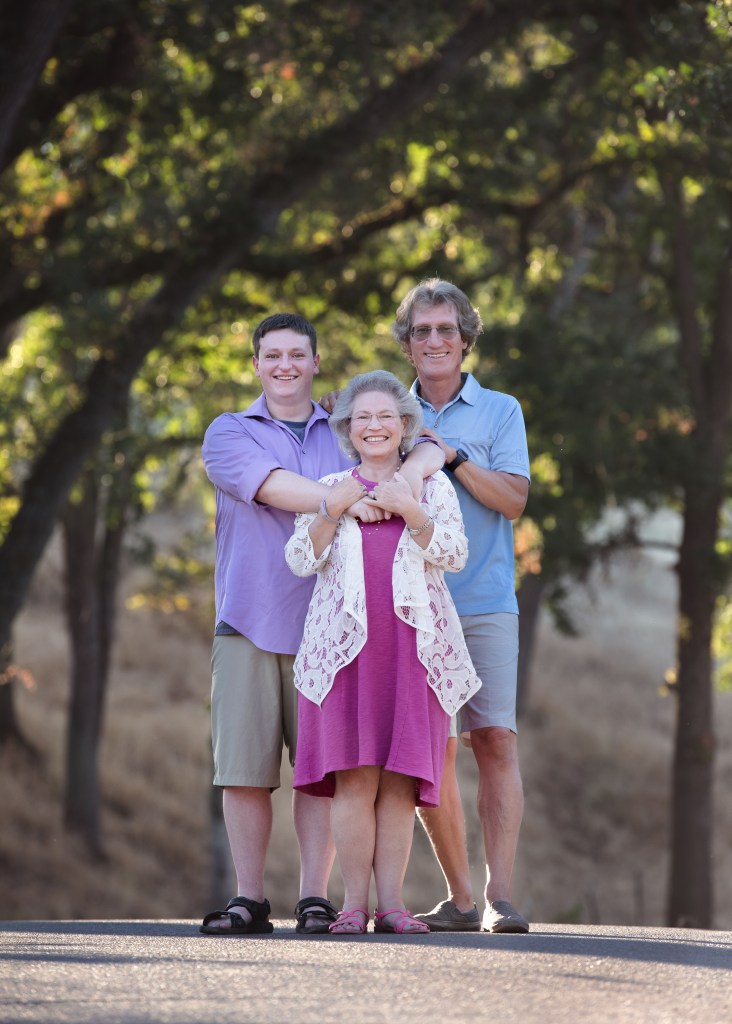
Original color image

Black and white filters don’t know what you want the image to be about. There are a lot of neat looking effects readily available through Instagram, VSCO, and other plugin sources; but those one-and-done tools don’t understand what is important in the image, and what can be downplayed or augmented to make the subject really pop.

If you desaturate an image and make no other changes, certain details that stood out because of their color will be diminished or lost in your black and white image. Although the colors may have been in great contrast, they may also be very similar in tone. Converting an image like that to black and white can make it all a muddle of similar shades of gray.

A successful, eye-catching black and white image needs to have bright whites and rich darks. It needs to have its subject clearly defined so that even if it’s printed the size of a postage stamp, the subject matter is clear and readable.
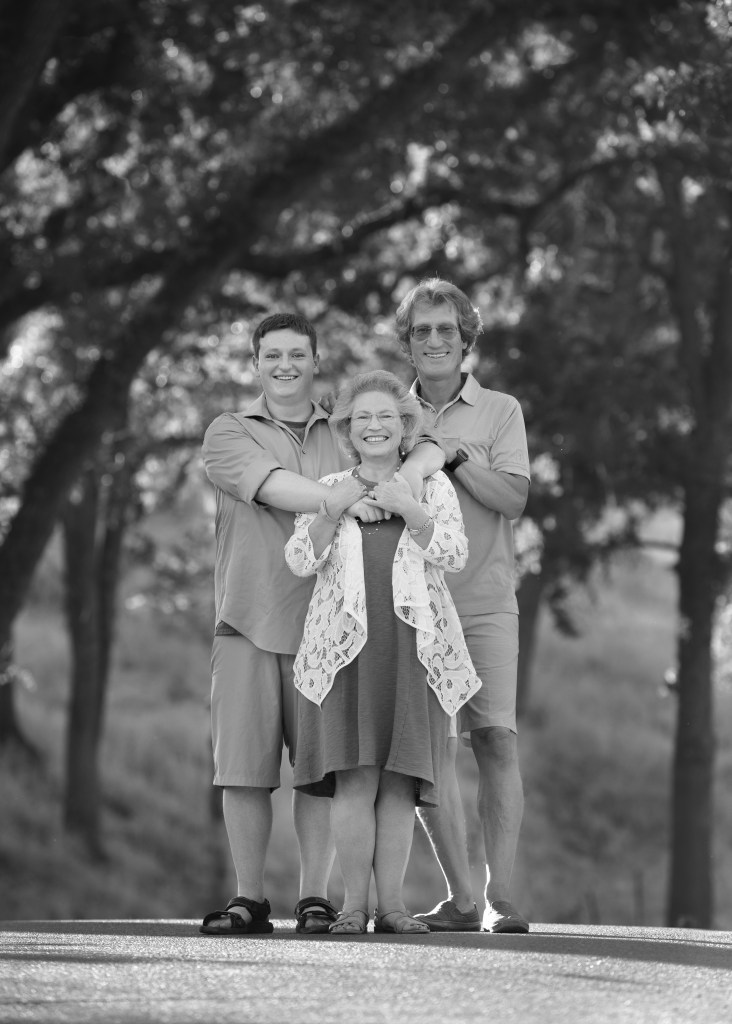
Automatic conversion by desaturation–the subjects blend with the background for lack of contrast.

The images I’ve included show the progression an image can take from color to black and white. In the color version, the pink and blue clothing easily sets the family apart from the beautiful greenery in the background. But when I automatically convert the image to black and white (by desaturation), the family seem to merge with the background. Their prominence in the frame is really diminished. Alternately, in my hand edit, I’ve manipulated the light and shadow values to bring the family back out of the background and make them the stars of the show again.

Color spoils easily. The vibrant, on-trend color that makes you love an image today can also make it look dated in 7 or 8 (or 20?) years. Color is very susceptible to the changing tides of fashion, so if there’s a lot of bold color in a shot, that can be a really good reason to also have a black and white edit. Without the element of color, images can transcend time more freely and endure more without the connotation of any particular era. On the other hand, there’s a valid and joyous place in the world for all that is of this very moment and will no longer make sense to us 6 months or a year from now. “Now” and “Always” are equally precious.
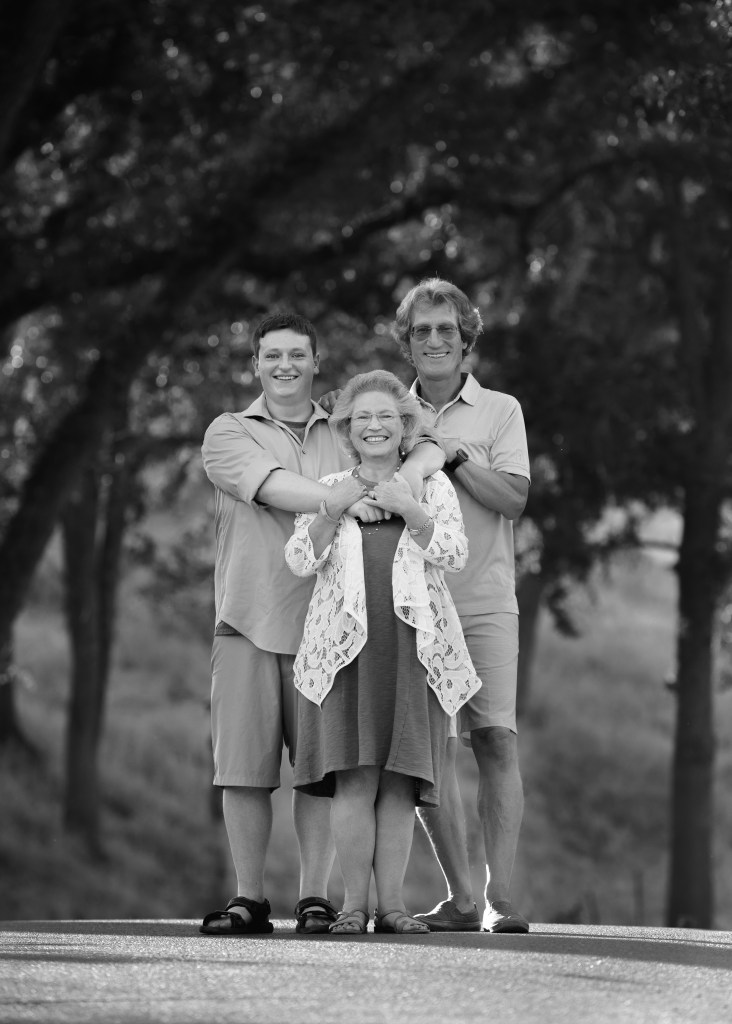
Custom hand-conversion from color to black and white–a dark background contrasts strongly with well-lit subjects, and the tones in the clothing are varied.

So, automatic black and white conversion is not available in my product line. I encourage my clients to reach out to me personally for their black and white conversions so they can get a black and white image that is every bit as thoughtfully created as the color version.
The Magic of Processing

I started dabbling in Photoshop for fun in 1997. I was just a kid. Later, in college, I got my first job at the University library. One of my job duties was working in Photoshop to restore damaged historic photos from the library’s collection. At that time, I built the real foundation of the processing skill I bring today. I didn’t get much instruction, but I learned how to layer, how to blend well, and how to fool the eye.

Fast foward a couple decades or so. When I began to sincerely invest in my education as a portrait photographer, with that new formal knowledge based on the foundation of all those years of experience… suddenly, I could see the Matrix. Does that reference date me?! hahaha

But really… Images: they are all. just. pixels. A photo is a painting made out of pixels. Photoshop makes an image into modeling clay in technicolor. You can do anything you want with it. It is such an amazing, sophisticated tool.

I know I talk a lot about processing on my blog, and my experience in that realm is definitely on my A list of skills. But I don’t use processing to make boring images interesting. My goal is to use processing to make amazing images spectacular.

Processing and retouching conversations usually center around “perfecting” a client’s appearance. I do correct the posture and retouch impermanent blemishes, as a mundane matter of course. But to me, the real gold of processing is not about making people thinner or fixing skin. It’s about creating magic.

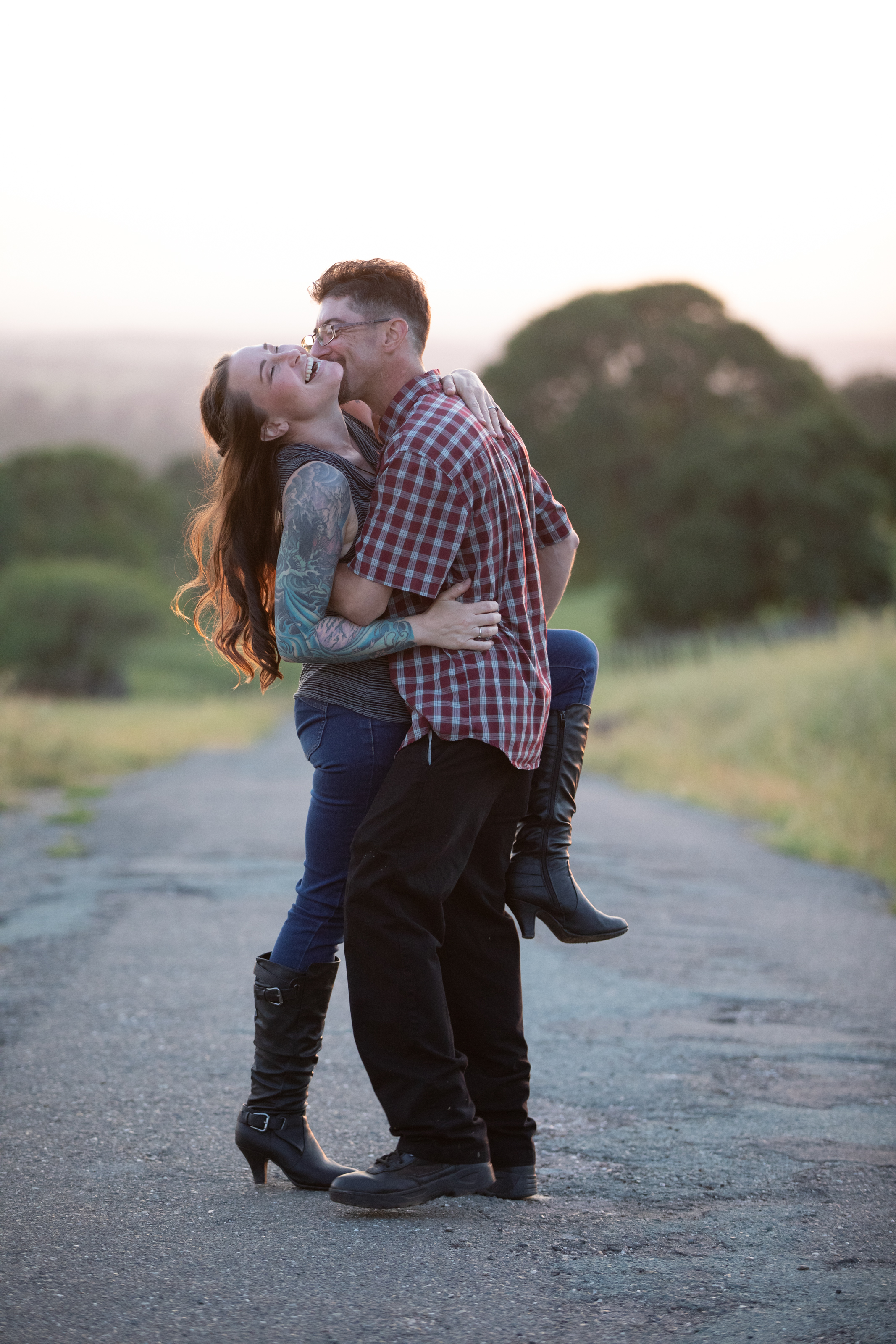
Straight out of camera.

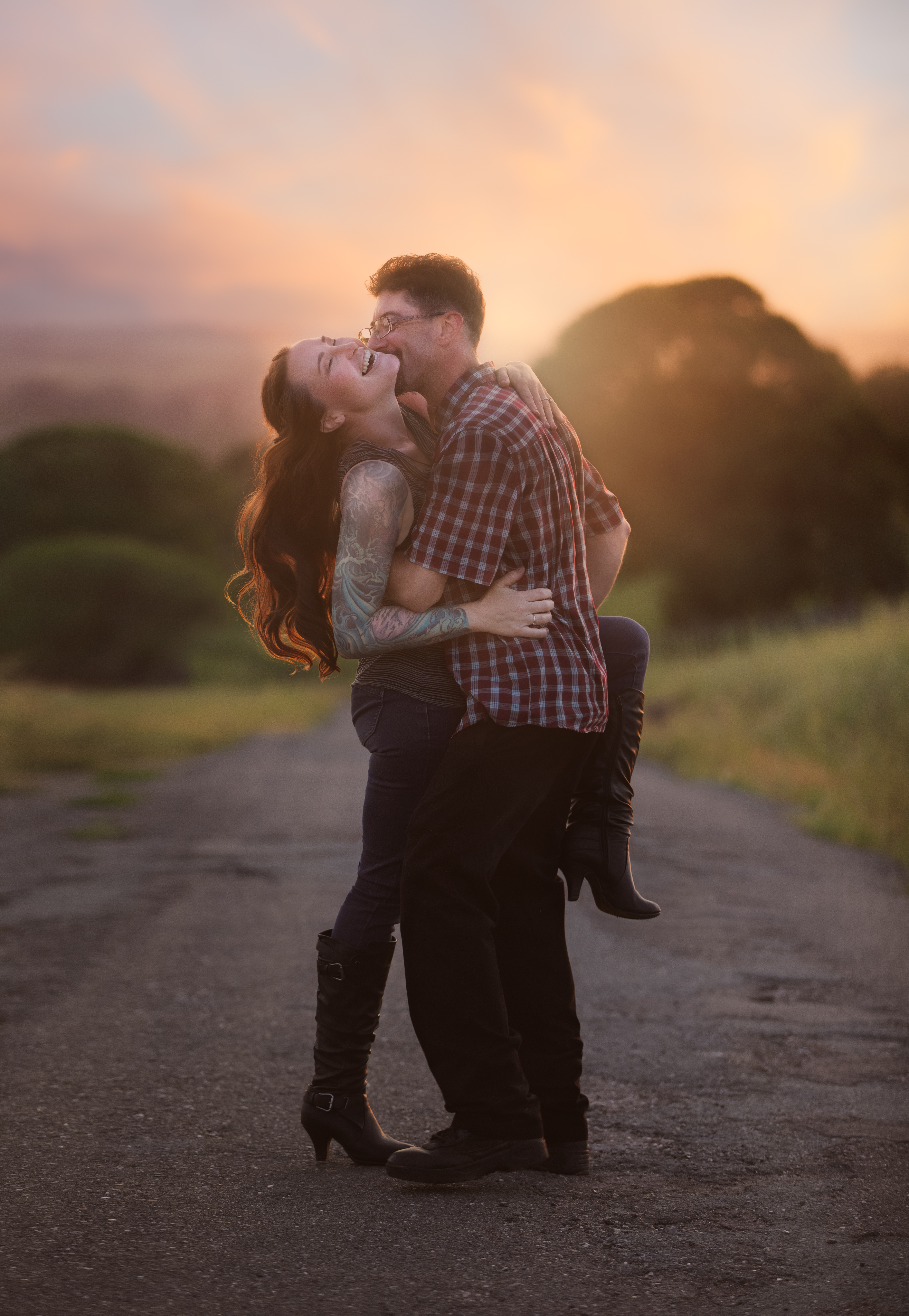
What if her hair flew up just a little higher and spread out just a little more? What if she had pointed her foot more gracefully when she kicked it up? What if the sunset that night had been more colorful? What if the sun set right behind them instead of off to the right somewhere?

Magic. That’s what.

With magic.

Look for this image at the Amador County fair next week!

Working With Kids And Animals

“Never work with kids or animals”…said so many people, always, forever…..

But kids are my wheelhouse, and there’s nothing cuter than kids with animals! I see their point, though. Kids=chaos. Animals=chaos. Kids x Animals = whoa…….

Sessions with kids and animals can be super cute and fun! For little kids though, it can end up being more of a lifestyle session than portraits. That’s fine if it’s what you’re after! I’ve been enjoying doing some animal composites this season though, and I’m finding the results are sometimes a bit more magical than the real deal could have been.

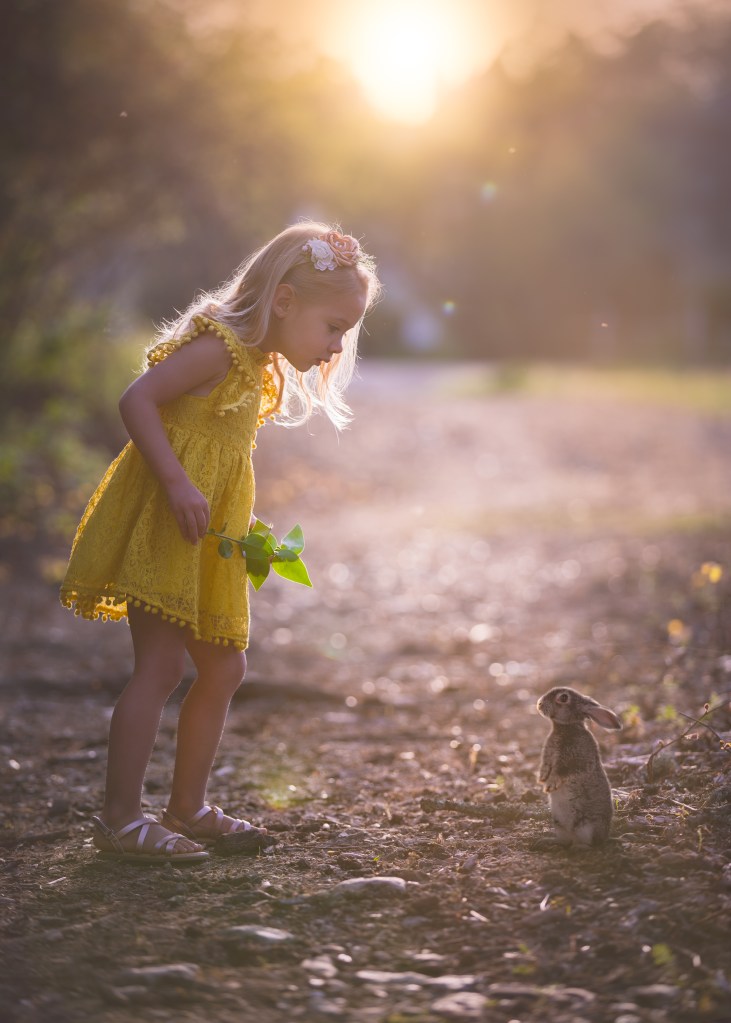
girl and rabbit meet at sunset
Could this kind of calm, thoughtful interaction really happen outside of fairy tales–no less in front of an audience of kindly coaching parents and an imposing camera lens?

I shared this image (the girl in the yellow dress) on the Relish Facebook page, and I received a handful of requests for similar shoots. Folks were disappointed when I told them, “yes we can do this, but just so you know, there wasn’t really a bunny at the shoot!” I get it–it’s a super cute thought to see your kids get to play with a real bunny and have pictures of that. But in reality, that situation can be more stressful than cute. A real bunny can easily get scared and run away. She needs careful, gentle treatment, and may get nervous and nibble fingers or have an accident on that beautiful little dress. When real animals are in the shoot, I find that tensions can run high.

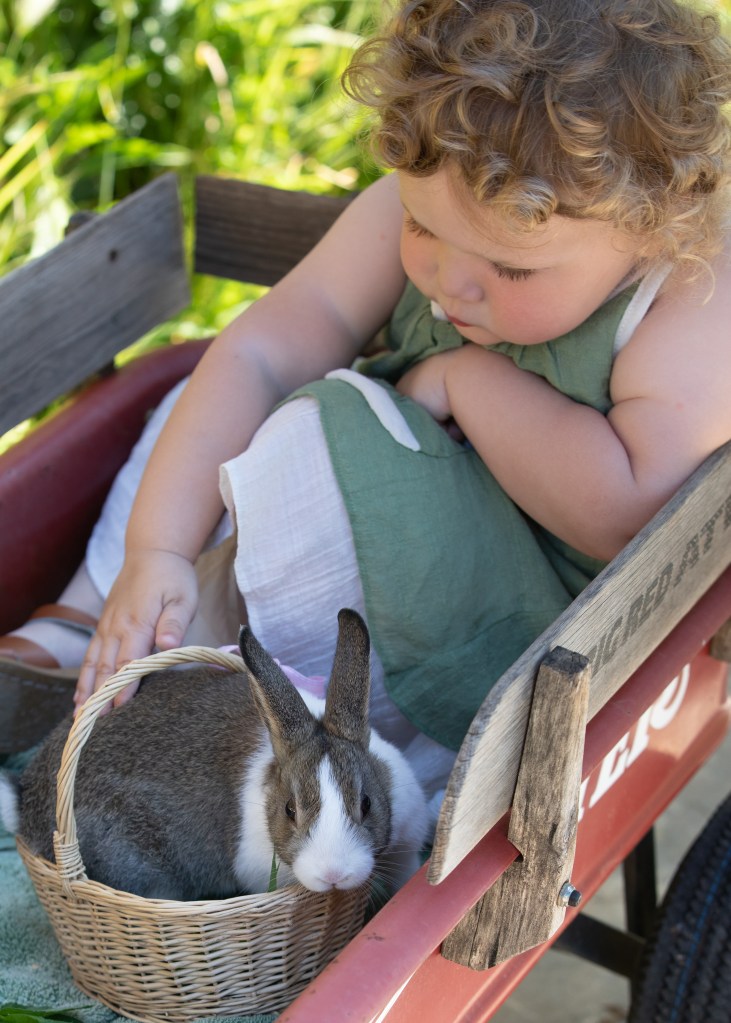
With a real bunny, we had to be confined to make sure she didn’t get lost, and both bunny and child were in constant motion. Daddy was trying to keep Evi from standing up and the bunny from jumping out of the wagon.

My daughter got a bunny this spring and I wanted to do a photoshoot for Easter. I made a nice flat spot in a grassy planter for her to hold the bunny. I set up my reflector. But I put her in the grass and she pitched a fit. She didn’t want to sit in the planter. The bunny climbed up the grass and wanted to chew on the tree bark. It was not picturesque. Plan B was putting them both in the wagon–not my vision for a nice color palette, and I had to quickly improvise the backdrop by changing my angle to something less than ideal. The bunny ate grass, and Evi petted her. It was cute. Super cute.

But these shots have barely a hint of the aura of wonder I was able to create in that first image, where I didn’t have to worry about the bunny escaping, and the little girl could be given a simple task without being distracted by the erratic activity of a live animal.

I asked that sweet little girl to look for ants in the bright yellow leaves that the sun was backlighting. She was calm. It was mellow. When I got home, I saw that shot and thought “that’s a perfect spot for a bunny!” …I had a perfect pose from her, and I was able to blend in a bunny in a perfect pose, in a perfect position.

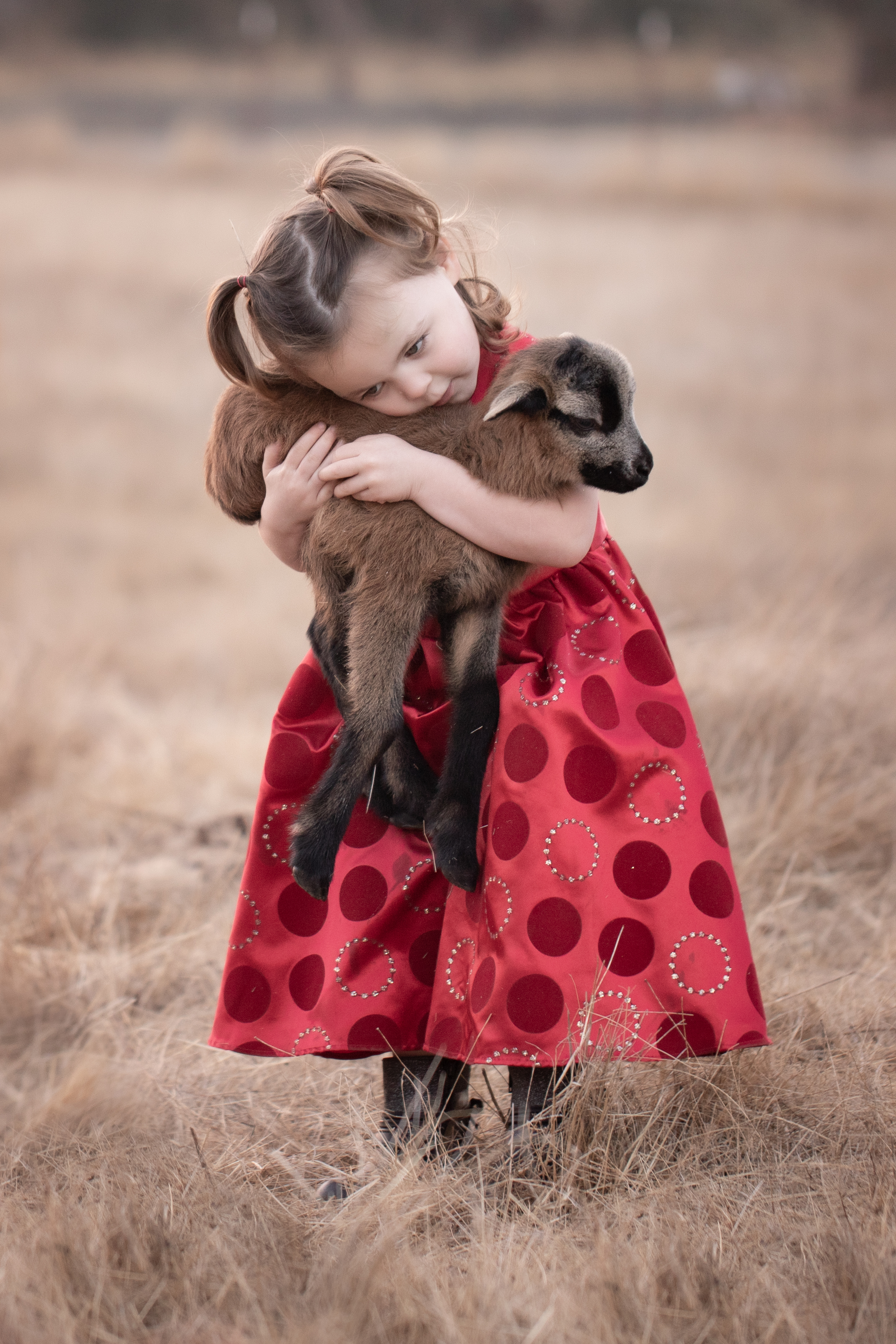
I love this lifestyle image of a little girl with her new baby sheep. Images like this have more of a documentary feel, and are a lot more difficult to achieve with smaller animals.

So… yes, we could bring a bunny out for little kids’ sessions. I do have a real bunny, and she’s super sweet and friendly. But it wouldn’t be very fair to that timid little creature. The reality of live animals in a session is a lot more chaotic and less picturesque than it plays out as in the mind’s eye. I’m not saying I’ll never do it–I gladly will any time if folks have their own animals they’d like to include! But to make something like the really magical composite above, I need to be able to have more control than a real “kids x animals” experience can usually give.

Even when the animal really was at the session, those shots are also often composites. The animal and the child so rarely do the right thing at the same time that I often blend multiple shots to create one final image. With over 20 years’ experience with Photoshop and photography, I can create a full composite that is even more magical, and nobody has to get tinkled on.