Amador County, California photographer Sarah Hart writes about photography, from demystifying technical concepts to communicating the human condition through art.
I’ve been obsessed with editorial fashion photography all my life. Bold, fearless photographers like Helmut Newton and Annie Liebovitz captivated my imagination. I was so drawn to the sprezzatura–the effortlessness of their work. It was so peculiar, so edgy or intense, yet looked like it happened that way naturally. It seemed like those photographers were just always in the right place at the right time.
Muse: Allyson Parr
Although the style of my work is night and day from hers, Lindsay Adler’s ethos really resonates with me, and I’ve spent many hours studying her photography lectures. In one of her classes, she mentioned scheduling a creative day once a month to shoot something that is not for clients, but develops your own concepts and creates the type work you really want to sell.
At first it felt indulgent to set “work” aside and plan something elaborate for myself, but I’ve come to realize it’s not just for fun–it’s an investment in my professional development and my brand.
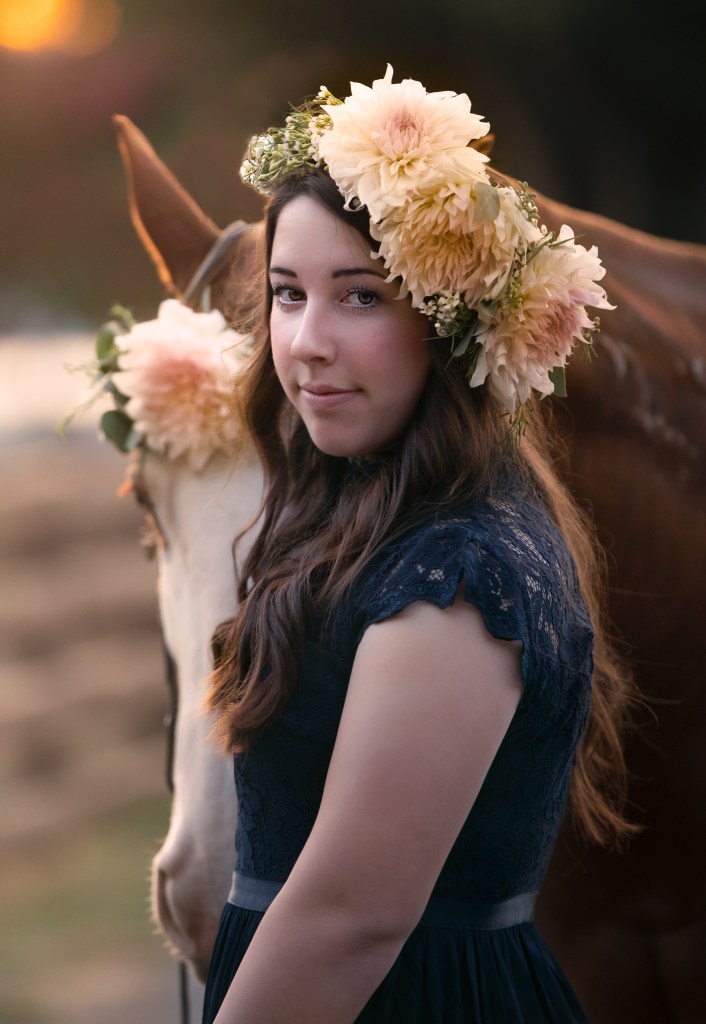
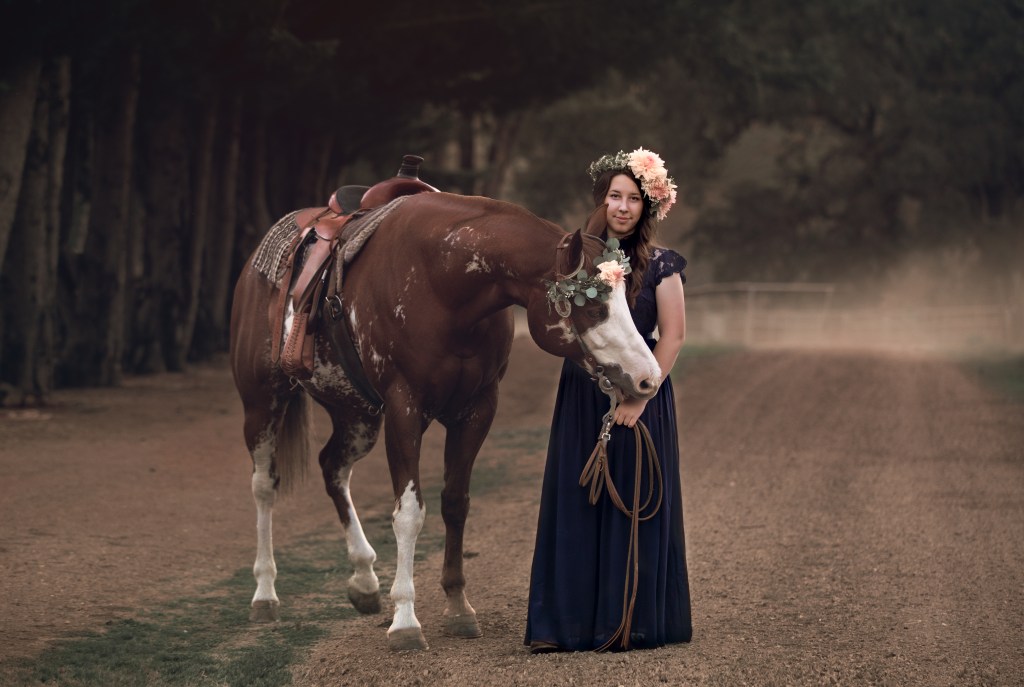
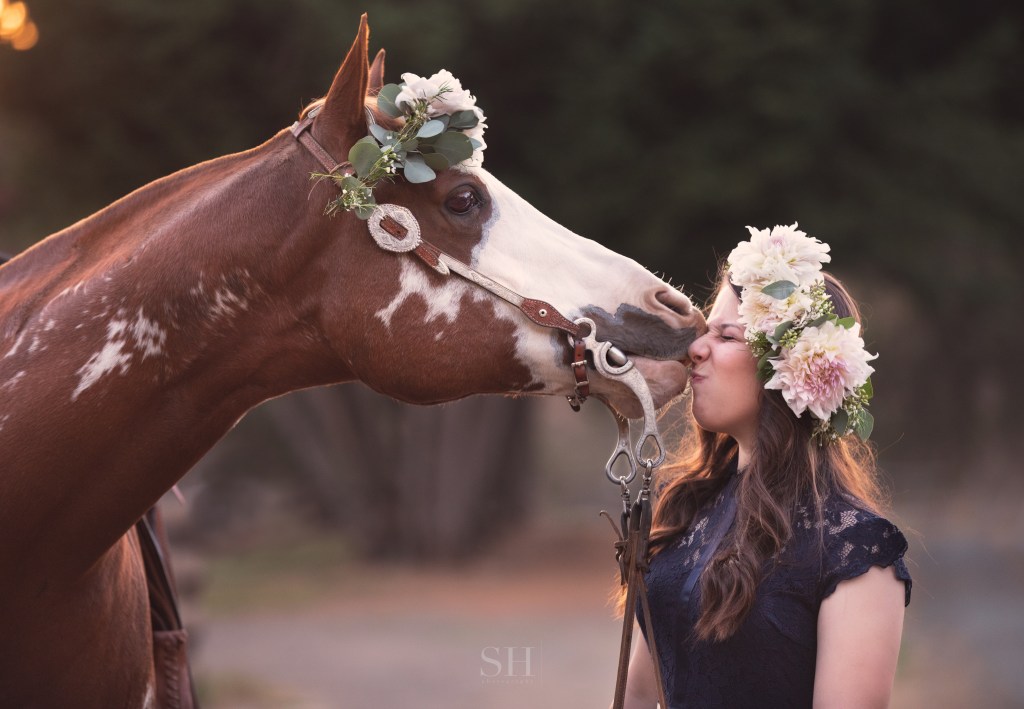
As an artist, I’ve found my most inspired work comes when I collaborate with others. I have a long bucket list of fellow creative professionals whose work sparks my soul. For my last concept shoot, I teamed up with Molly Allen of Made in Amador, who designed a pair of bold dahlia and eucalyptus crowns for my muse and her horse. Made in Amador floral designs have that sprezzatura I love. Molly colors outside the lines. Her pieces have a certain wild abandon to them, yet they always feel balanced and down to earth. Nothing could have brought my vision together more perfectly.
As my business grows ever more booked and my own concepts develop further, I realize it’s quite an effort to put together a styled photoshoot! Although I haven’t hit the once a month mark this year, I I’ve been incredibly energized and inspired by the editorial work I’ve done and I can’t wait to start planning my next project.
I’ve noticed parents can get pretty stressed about family photos, and most of the stress seems to revolve around whether the kids are going to behave and smile for the camera. So, I thought I’d write a bit about what you can do before, during, and after your session to make sure your kids do their part and make fantastic pictures.
The real answer is super simple: don’t worry about it–let me handle that.
But that would make a really boring blog post, so here are some things you can do as a parent to make my job easier.
1. Keep the mood relaxed and positive.
You can skip the coercion and threats–that is so 1980’s! Tell your kids you’re looking forward to having a fun session and can’t wait to see what the pictures will look like. You may be a little concerned that they won’t cooperate, but it’s usually best to put your trust in your photographer and assume everything will be awesome. The kids will likely follow your lead.
Start your session with everyone as well-adjusted as possible. Nobody looks good hangry–grownup or otherwise. ‘Nuff said? Since sessions are usually in the late afternoon, it can be tempting to save up appetites for a nice dinner afterwards. For the sake of harmony, it might be better to have an early dinner/late lunch and then go out for dessert when the session’s done.
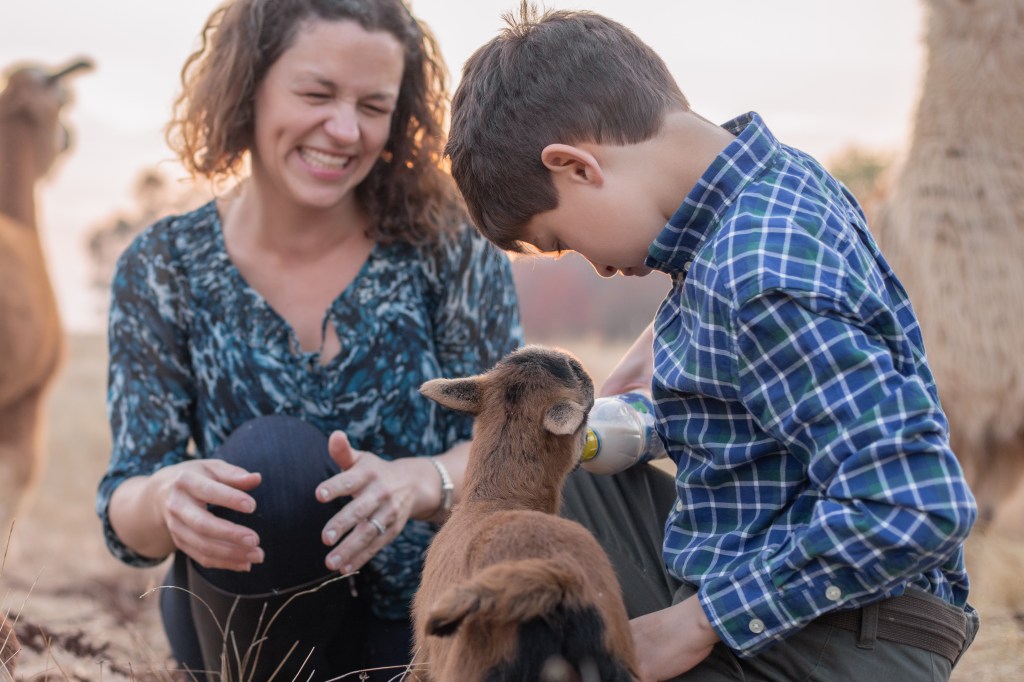
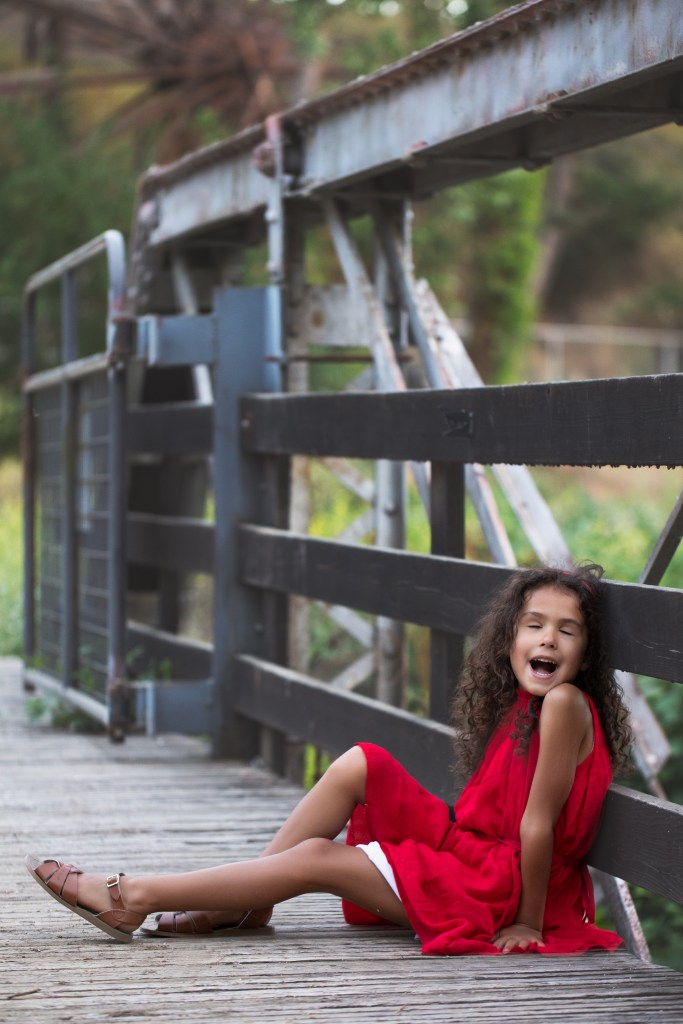
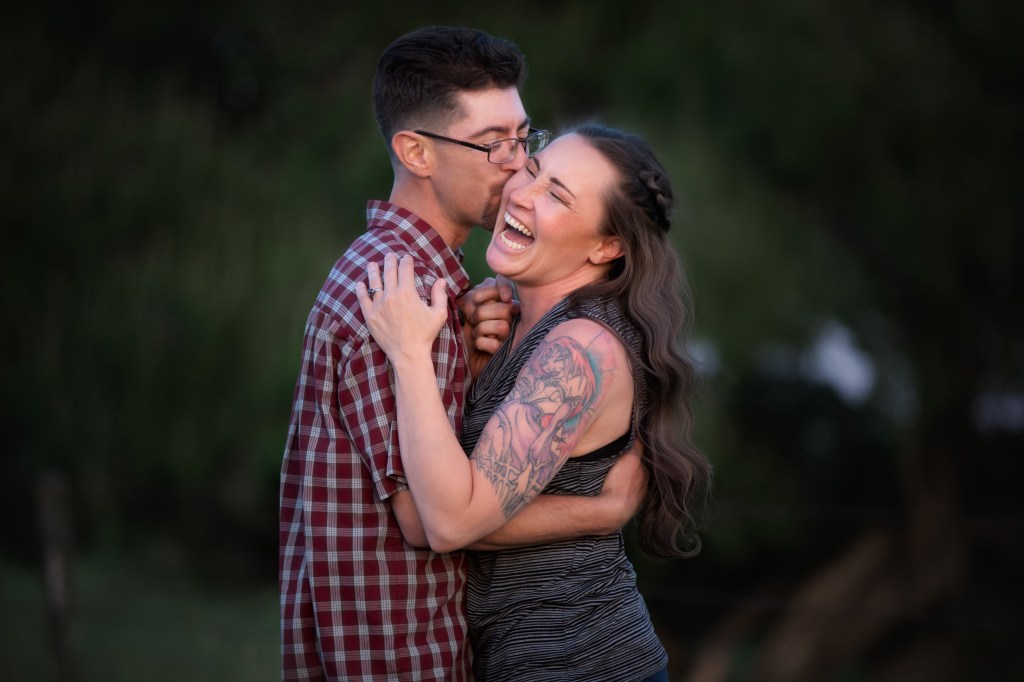
Mom’s joy was contagious.
2. Follow your photographer’s lead attentively.
Adults are harder to photograph than kids. Read that again.
This counts double in family sessions. To get the most out of your session, put your attention on the photographer rather than on supervising your kids. Experienced photographers have a million strategies for making real smiles shine through. We rely on our communication with the whole family to make your images look amazing.
Even if you’re not in the shot, follow the photographer’s lead. Avoid giving instructions to your kids unless requested by the photographer. Photographers’ visions are usually a mystery until you see the images. Let the photographer set the boundaries when needed.
4. Let them be kids.
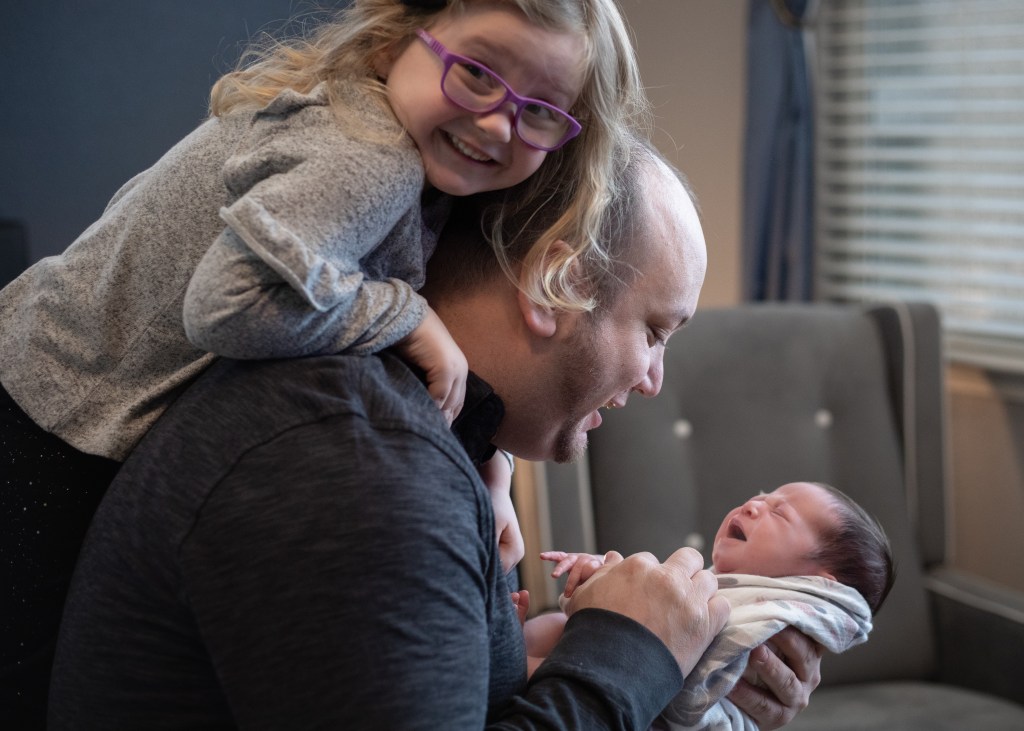
Your family portraits should be a beautiful memory of who each of you are right now at this moment in your lives. Your 3-year old is probably a goofball, and that’s ok. No, that’s better than ok–it’s fantastic. Maybe your husband is a little grumpy, for that matter. That’s ok, too. There’s nothing cuter than the moment when a goofy 3 year old forces a grudging smile out of a grumpy dad! Just let everyone be who they really are, because that’s the beauty of your family.
Nothing shuts the magic down faster than a power struggle. Even if kids are acting out a bit, it may be better to address that after the session’s over. Don’t worry about what the photographer thinks. We–for my part, anyway–aren’t looking for perfect behavior; we’re looking for personality.
What could be construed as disruptive antics=priceless moments.
3. Give it time.
Kids are always either a little wild or a little cranky when they first get out of the car. Rather than trying to force them to change their mood instantly, it works a lot better to give them some space to unwind. Let them play for a few minutes (the photographer will love getting some candid shots of them doing their own thing), and once they’ve burned off some restless energy, the posed shots will be a lot more successful.
This is why I don’t recommend mini sessions (I personally don’t offer them at all). I’ve found that the best, most authentic connections and smiles come toward the second half of my longer sessions when everyone is relaxed and natural.
5. Have fun.
Play with your kids! Mood can be contagious, so make sure yours is upbeat and relaxed. Put your worries aside. Have you ever seen an image in your photographer’s portfolio that looked like a hot mess? (If your answer is yes, consider shopping around a little more.) We’ve got you, and you’re going to love what we create.
Keep the takeaway positive as possible, even if you weren’t super impressed with your kids’ behavior. Parenting is personal, but I’d be tempted to say what happens in the photoshoot stays in the photoshoot–just let it go in the interest fostering future goodwill toward photo day. If you were relaxed and following the photographer’s lead, it’s highly unlikely anything they did will spoil your photos.
If you’re laughing and having fun with your family, you’ll bring out their lighter sides, too. Leave the stress to the professionals and enjoy this time of joy and connection.
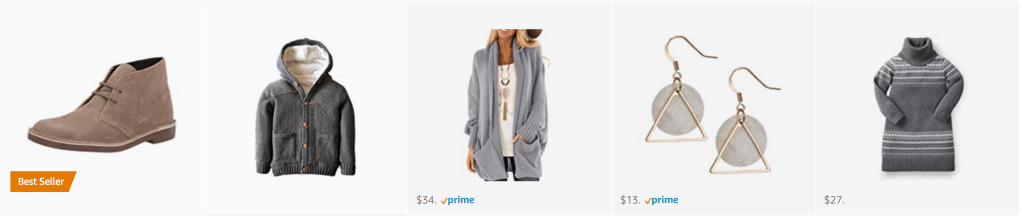
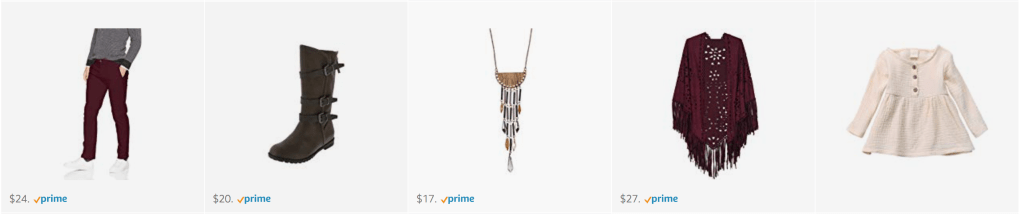
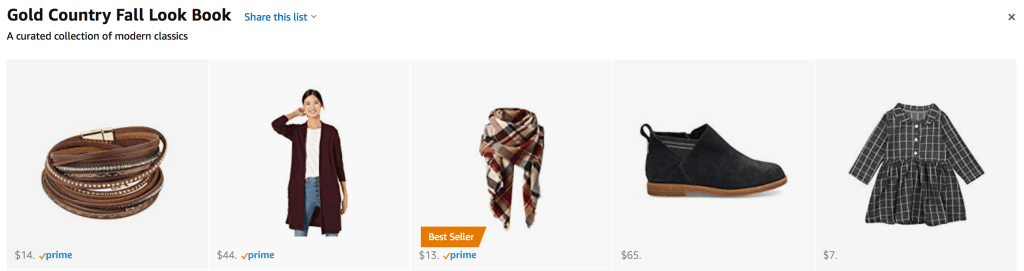
Whoodley woot woot! I just finished putting together my fall look book for sessions! (You can see all the magic here.) I’m so excited about the little micro collections I built. Each one has its own particular style and palette. It’s difficult to describe the ways that color, texture and pattern interact well, so showing is perfect. I’m so thankful to have an Amazon Influencer account that lets me create this amazing resource.
The most important concept to me while I was building these little family collections was sprezzatura–a certain effortlessness of style. I tried to to include an unexpected element in each to make them as utterly unique as each family I meet. I’m not aiming to have someone buy these collections as they are and wear them, although anyone certainly may do. What I really want to do is inspire creativity in a way that introduces some fresh perspective and authentic personality to the family wardrobe game.
Let’s be totally transparent here. Amazon’s Influencer program is all about sales, right? I do get a few pennies in the jar each time someone uses my shop. Some day I might make enough off of this to buy an extra battery for my camera. But I’m not a merchant, I’m a photographer. I’m not doing this to make money on clothing sales. It’s just a phenomenal tool to communicate ideas, and to help my clients plan and get excited for their sessions. It’s like Pinterest, only it’s on Amazon, so if you love something you can just add it to your cart. And most of it is inexpensive. What could be more awesome?!
Anyway, I digress. Here are a few thoughts about dressing your family for your fall session.
First of all, it’s ok to let each individual personality shine through. If everyone has a different style, you can unify the look through color or texture. Don’t worry about your teenager’s eccentricity too much. If one of your kids is a book worm and the other is an athlete, go with it. Everyone doesn’t have to be wearing cookie cutter Sunday Best for the pictures to be fantastic. I tried to show in these little collections how different aesthetics can mix well in the same group. Because every family is a little eclectic, right?
If you’re not formal in your everyday life, there’s no reason to “dress up” for your session. The images will be much more authentic if you dress in a way that’s comfortable to you. Make your look special by adding a bold accessory or two rather than stepping up the level of formality in the clothing itself.
The best way to make a sure-fire success of your family’s look is to choose either a warm or cool neutral palette, and then include a pop or two of one color (bonus if it’s subtle or timely). When I say a pop or two, I don’t mean per person. I mean per group. Only one or two people should have the color on, and the rest should be all in neutrals.
Use pattern with extreme caution. If there will be more than one pattern (even if it’s the “same” pattern, like two plaids), then only one of the patterns should have non-neutral color, and the neutrals need to coordinate.
Of course there are exceptions to every rule, and these aren’t even rules to begin with. The whole point is really to say, “yes, you can use color!” and, “yes, you can use pattern!” as long as you use them in a way that supports rather than detracts from the impact of the people themselves.
So, dive in, enjoy, and share your thoughts with me about the whole process! What do you think of the pattern mixing? What do you think of the style mixing? Would you do it?
Plato explored the notion that all things exist as copies of their ideal forms–theoretical blueprints of sorts. I imagine this is something people have mulled over in various forms throughout human history. As Plato’s ideas developed over time through the lens of other minds’ eyes, it became more common to think of these universal forms as ideas, and less common to think of them as actual objects existing on another plane of reality.
I read about Plato and his Theory of Forms when I was young, and it brought my attention to how I tend to perceive the world based on ideal forms, sometimes at the expense of reality. This is especially interesting when applied to my perceptions of people, and this may be why artistic portraiture is so compelling to me.
When I think about the people around me, I see their essence first. I’m very aware of the core of their selfness. People’s actual physical aspects are secondary to me, by a wide margin. I often find myself surprised when I see a photograph for the first time of someone I’ve only met in person. The photograph will look so different to me than the person I met. Without the actual personhood present, I notice a lot of the physical characteristics for the first time. Kind of strange? It feels strange.
Normal or not, this mode of perception informs how I shoot and process my own photography. This is my lens. I want to photograph who a person is much more than I want to photograph what a person looks like. This can be tricky sometimes, but I find it’s actually easiest with people who say they hate pictures or that they’re not photogenic. I find that those people don’t have a practiced barrier in place for me to get through before I can see who they really are.
When I’m processing, I’m looking to take away anything that distracts from who that person is at the utter depth of the soul. I want everything around that person to support the message, “look how amazing this person is.” There are a lot of little physical distractions we all deal with day to day. Many little details deviate from what we would consider our ideal form of self; but who we really are is our ideal, and that’s what I see when I look at people. I think of people at their best, and I create that image from my own perspective.
Seeing your own self this way is transformative.
When a portrait is about who a person is, it can’t help being beautiful–it really can’t. We’re all weird in our own particular idioms, and that is utterly fascinating. So if there’s one thing you can take away from this read, and especially from your session if I ever get the honor of working with you, it’s this: you–the real you, as you are–are just what you should be, and you shouldn’t be anything else.

 Reflecting On Light